As an Amazon Associate, we earn from qualifying purchases. Some links on this site are affiliate links at no extra cost to you. Our recommendations are based on thorough research and editorial judgment.

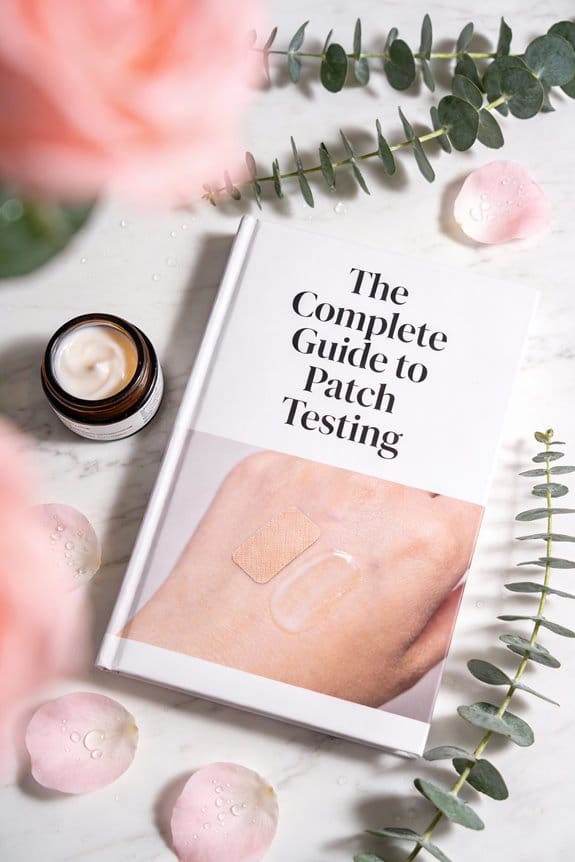
The Complete Guide to Patch Testing New Products

Patch testing new skincare products requires applying a pea-sized amount to a clean, discreet area like the inner forearm and leaving it on for 24 to 48 hours, or five minutes for cleansers. Monitor for redness, itching, swelling, or burning, signaling potential allergic reactions. Experts advise consistent testing on small areas, especially with actives like retinoids and AHAs, to prevent adverse effects. Immediate washing and soothing with fragrance-free moisturizer is necessary if irritation occurs. Further exploration reveals critical steps for safe product integration.
Key Takeaways
- Apply a small amount of new product on a clean, discreet skin area like the inner arm or behind the ear.
- Leave creams or serums on for 24-48 hours; cleanse products for about five minutes before observing reactions.
- Monitor for redness, itching, swelling, or burning during the test period, and avoid washing the test area unnecessarily.
- Use patch tests especially with products containing fragrances, preservatives, AHAs, retinoids, and botanical extracts to identify sensitivities.
- Document any reactions and seek medical help for severe symptoms, gradually introducing new active ingredients to prevent irritation.
Why Patch Testing Is Crucial for Your Skin
You may be interested


Although patch testing may seem time-consuming, dermatologists emphasize its necessity for preventing adverse skin reactions when trying new skincare products. The importance of patch testing lies in identifying individual skin sensitivities and avoiding allergic reactions caused by essential ingredients like fragrances, preservatives, AHAs, or retinoids. Experts recommend applying a small amount of product to a discreet area, such as the inner arm or behind the ear, to monitor for irritation or adverse reactions over 7 to 10 days. This slow assessment guarantees accurate detection of delayed skin responses. Incorporating patch tests into a skincare routine safeguards skin health by minimizing potential damage and building confidence in new products. Dermatologists assert: “Never skip the patch test to maintain healthy skin and safely introduce potent actives.” Additionally, checking ingredient compatibility is crucial for people with sensitive skin to prevent unwanted irritation during the patch test.
How to Perform a Patch Test Correctly

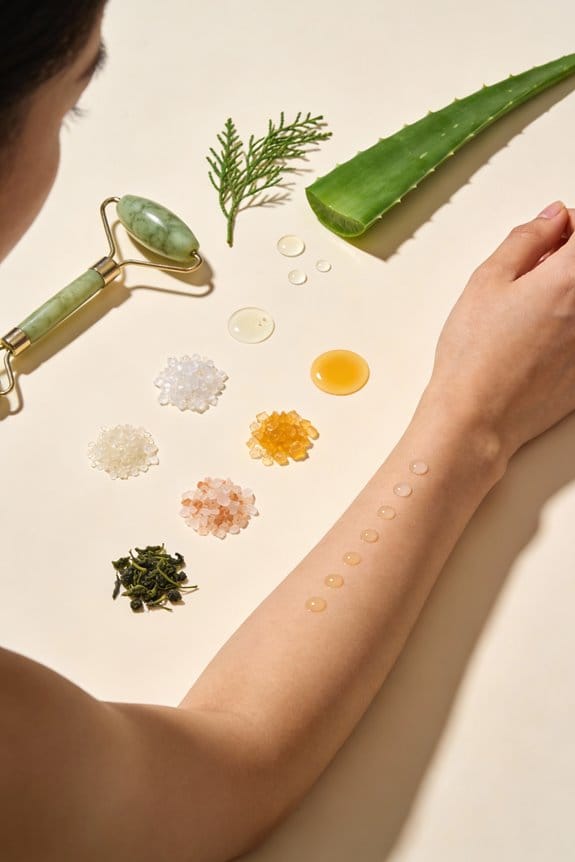
Begin patch testing by selecting a discreet, clean area of skin, such as the inner forearm or behind the ear, free from other products or irritation. Expert dermatologists recommend applying a small amount—about a pea-sized drop—of skincare products to this site. Leave creams or serums on for 24 to 48 hours, while cleansers require only about five minutes. Closely monitor the area behind the ear or forearm for signs of irritation, including redness, itching, swelling, or burning sensations. If any potential irritation appears, wash the area off promptly with mild soap and water and soothe the skin using a fragrance-free moisturizer. This step-by-step guide is important because it helps identify adverse reactions early, preventing widespread skin damage during product introduction. Always test on calm, healthy skin for accurate results. Introducing active ingredients like retinol gradually during patch testing can help minimize irritation and ensure skin tolerance before full application.
Common Ingredients to Monitor During Patch Testing
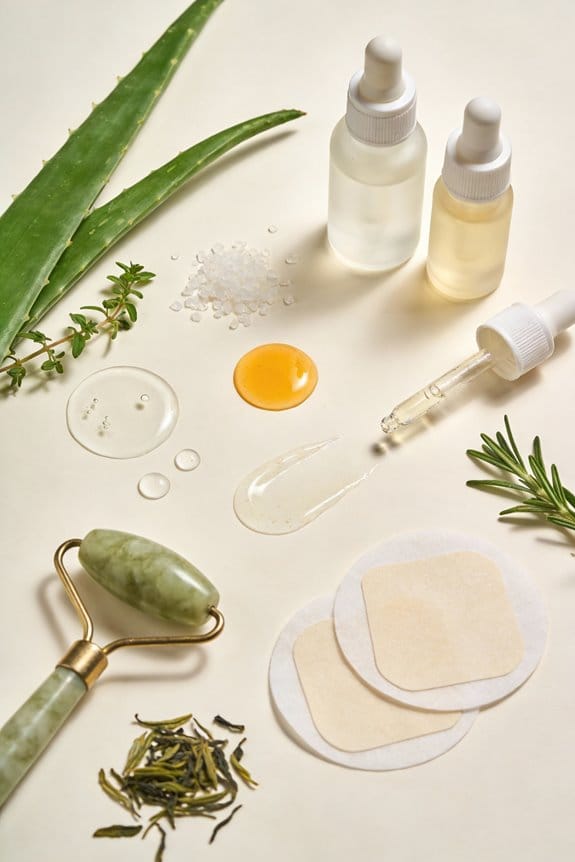
When performing a patch test, particular attention must be given to certain ingredients that frequently cause skin reactions. Experts emphasize testing fragrances and essential oils, common allergens known to provoke sensitivities. Potent active ingredients like retinoids and alpha hydroxy acids (AHAs) require careful evaluation for irritation potential. Additionally, skincare products containing preservatives such as parabens and battery preserving agents must undergo patch testing, as they often trigger allergic reactions. Bioactive extracts and botanical components, despite natural origins, should never be overlooked because their complex compositions can cause unexpected responses. New synthetic ingredients present increased risks and demand thorough testing before use. Follow these steps strictly: apply a small amount of the product on a discrete skin area, monitor for 48 hours for irritation or allergic reactions, and avoid introducing multiple new ingredients simultaneously during patch testing. It is also important to consider products with occlusive protective creams, as these formulations specifically help restore and maintain the skin barrier during recovery from irritation.
Recognizing and Responding to Patch Test Reactions
How should one identify and manage skin reactions during patch testing? Patch test reactions typically include redness, itching, swelling, or burning, signaling possible allergic responses to skincare products. Experts advise to observe the test site carefully for 24 to 48 hours, as delayed symptoms may appear. At the first signs of irritation, wash the affected skin with lukewarm water, avoiding harsh soaps, and apply a fragrance-free moisturizer to soothe discomfort. Mild tingling may occur with active ingredients but should prompt caution and gradual product integration. Persistent or severe reactions, such as significant swelling, difficulty breathing, or widespread hives, require immediate medical assessment. Document all symptoms precisely to inform healthcare providers. Recognizing and responding properly to patch test reactions safeguards skin health and prevents more serious allergic events. It is also recommended to use products that are fragrance-free and hypoallergenic to minimize the risk of irritation during patch testing.
Best Practices for Safe and Effective Skincare Integration
Although patch testing serves as a critical first step in identifying potential irritants, safely integrating new skincare products requires consistent adherence to established guidelines. Experts advise to always perform a patch test on a small area, such as the inner forearm, applying the product once or twice daily for 7 to 10 days to monitor negative reactions. For creams and serums, do not wash off during testing; for cleansers, rinse after 5 minutes. A detailed guide to patch testing emphasizes the skin is unique, necessitating individualized evaluations to prevent contact dermatitis. Document any adverse outcomes to guide future choices. It is important to patch test especially when introducing potent ingredients like retinoids. This protocol guarantees safe and effective incorporation of skincare products while minimizing risks associated with new skincare product use. Gradual application and monitoring of active treatments is essential to minimize irritation and dryness during integration, especially for sensitive skin types, highlighting the importance of skin type compatibility.
Frequently Asked Questions
Can I Patch Test Multiple Products Simultaneously?
Simultaneous patch testing of multiple products is possible but requires careful area selection to avoid ingredient overlap. Monitoring skin sensitivity and reaction timing is essential for accurate results comparison, minimizing product interaction and ensuring reliable assessment of multiple products.
How Long Should I Wait Before Using a New Product Fully?
Like planting seeds, product absorption and skin sensitivity guide application timing; waiting 24-48 hours allows monitoring of irritation signs and allergic responses on the patch area. Testing frequency varies with skin types and formulation ingredients before product layering.
Are Patch Tests Necessary for Makeup as Well as Skincare?
Patch tests are necessary for makeup due to varying formulation and allergen exposure risks. Sensitivity depends on skin type and skin barrier integrity. Regular patch test frequency guarantees ingredient safety, preventing irritation, product expiration issues, and improper makeup disposal.
Can Patch Testing Help With Allergic Reactions to Fragrances?
Patch testing effectively identifies fragrance allergy symptoms by evaluating skin sensitivity to common fragrance allergens, including synthetic fragrances. It guides selection of fragrance-free products or natural fragrance options, while emphasizing essential oils safety and fragrance labels importance in allergic contact dermatitis management.
What if I Forget to Check My Patch Test Area on Time?
A fading sunset mirrors missed patch test reminders, obscuring skin irritation signs. Ignoring the product reaction timeline risks overlooking subtle effects. Adhering to patch testing method, best application spots, and emergency response tips safeguards sensitive skin.