As an Amazon Associate, we earn from qualifying purchases. Some links on this site are affiliate links at no extra cost to you. Our recommendations are based on thorough research and editorial judgment.

The Role of Moisturizers in Different Climates

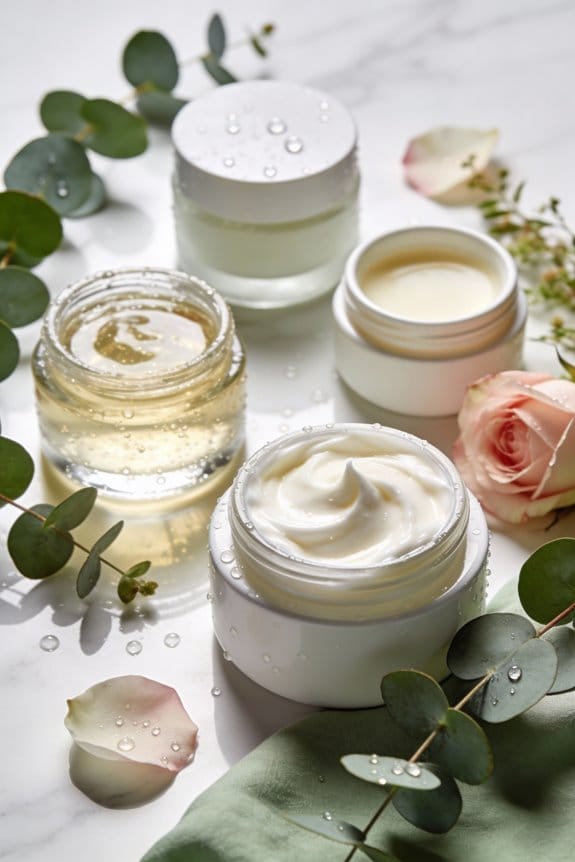
Moisturizers must vary by climate to optimize skin hydration and barrier health. In dry conditions, use thick creams rich in ceramides and fatty acids to restore the lipid barrier and prevent moisture loss. In humid environments, prefer lightweight gels with larger hyaluronic acid molecules that draw atmospheric moisture without causing oiliness. Experts advise switching products seasonally and tailoring molecular sizes for hyaluronic acid. Proper selection prevents dehydration and irritation; precise adaptations enhance skin resilience. Additional insights explain how environmental factors drive these needs.
Key Takeaways
- Moisturizers should be tailored to climate, using heavier creams in cold, dry areas and lightweight gels in hot, humid environments.
- Humectants like hyaluronic acid perform better in high humidity by attracting atmospheric moisture, but risk drying skin in low humidity.
- Different molecular weights of hyaluronic acid optimize hydration: smaller molecules for dry, larger molecules for humid conditions.
- Seasonal moisturizer switches help maintain skin barrier health and prevent dryness, irritation, or oiliness due to climate changes.
- Incorporating ceramides and fatty acids in moisturizers strengthens the skin barrier against cold, dry weather-induced damage.
How Climate Influences Moisturizer Absorption

You may be interested


Because ambient moisture greatly impacts moisturizer efficacy, it is crucial to tailor product selection according to climate conditions. Skin hydration depends on humidity levels; in high humidity, humectants like hyaluronic acid attract moisture from the environment, reinforcing the skin barrier. Conversely, in low-humidity climates, these ingredients may draw moisture from within the skin, risking dehydration despite a thorough moisturizing routine. Experts advise choosing moisturizers with varying molecular sizes of hyaluronic acid—smaller molecules penetrate deeply for dry climates, while larger ones retain surface moisture in humid conditions. Protecting the skin from environmental aggressors requires adapting moisturizing strategies to maintain peak hydration and barrier function. Prioritize products designed for specific humidity ranges to guarantee effective moisture retention and enhanced skin resilience. Neglecting climate considerations can weaken the skin barrier and exacerbate dryness or irritation. Additionally, incorporating antioxidants and vitamins into your moisturizer can further protect the skin from environmental stressors and improve overall skin health.
Adapting Moisturizing Routines for Temperature Sensitivity
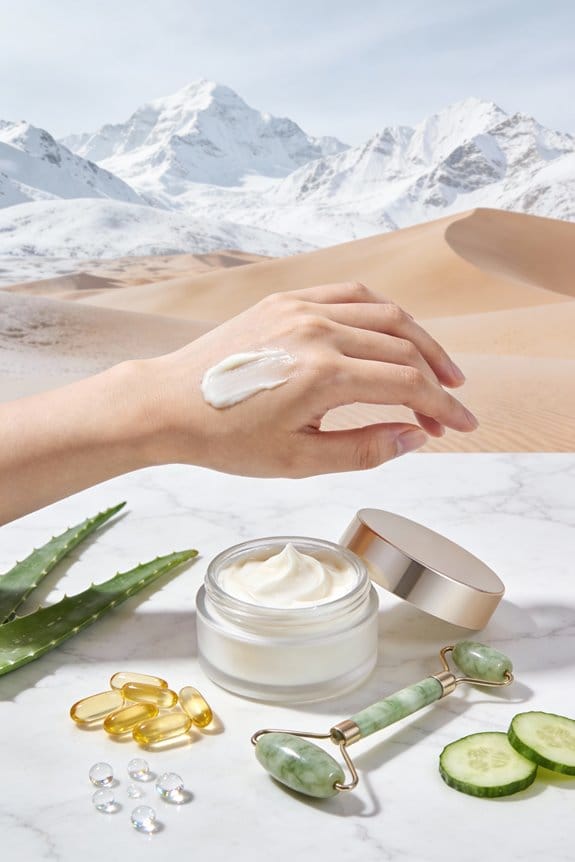
Maintaining ideal skin hydration requires adjusting moisturizing routines according to temperature variations, especially for temperature-sensitive areas like the facial T-zone. Experts advise tailoring moisturizing strategies to account for temperature and humidity changes. In cold, dry climates, apply thick creams rich in ceramides and fatty acids to restore the protective barrier and reduce fine lines caused by dryness. Conversely, in hot, humid conditions, use water-based products and lightweight gels to control elevated oil production without clogging pores. Personalized skincare demands switching formulations seasonally: heavier creams dominate winter routines, while non-comedogenic, gel-based moisturizers suit summer. Pour Moi Day Creams exemplify adaptive skincare by modulating hydration aligned with environmental factors. Follow these guidelines strictly to maintain balanced hydration, protect against environmental stressors, and optimize skin condition regardless of climate fluctuations. Similarly, maintaining consistent application of nourishing treatments significantly benefits hair and skin health across varying environments.
Recommended Products

Nourishing Face Moisturizer - Enhance your anti-aging skincare routine with this moisturizing face cream and facial moisturizer, designed to help your skin feel smooth and refreshed. Collagen supports the look of skin's flexibility while promoting a visibly firmer texture for both face and neck. Enjoy a youthful glow with a gentle solution that provides enduring hydration and care, ideal as a hydrating face moisturizer.

Dual-Action - Repair & Long-Lasting Hydration For Face & Neck: Restores skin’s natural protective barrier in just 1 hour while delivering powerful 48-hour moisture for a healthier, rebalanced complexion

NON-GREASY MOISTURIZER: This lightweight formula keeps the outer layer of your skin protected and hydrated without feeling greasy.
Differentiating Between Dehydrated and Dry Skin

While dry and dehydrated skin may appear similar, distinguishing between the two requires understanding their distinct underlying causes and presentations. Dehydrated skin results from reduced moisture levels rather than oil deficiency, often showing dullness, fine lines, and irritation. Dry skin occurs due to an impaired skin barrier, lacking natural oils and moisture. Experts emphasize adapting the skincare routine accordingly: prioritize hydration-focused ingredients like hyaluronic acid and glycerin for dehydrated skin to replenish water content. In contrast, restore dry skin by using ceramides and fatty acids to rebuild the skin barrier. Low humidity exacerbates dehydration, as the skin absorbs water from its own reserves, increasing oil production. Recognize these differences to select effective moisturizers and break the cycle of persistent dryness and imbalance. Choosing fragrance-free and non-comedogenic moisturizers can also help minimize irritation and protect sensitive skin during hydration.
Recommended Products

DAILY FACIAL MOISTURIZER: This moisturizing face cream delivers a powerful boost of hydration to nourish and plump skin for a firmed-up, bouncy complexion with a luminous finish that lasts all-day and feels soft.
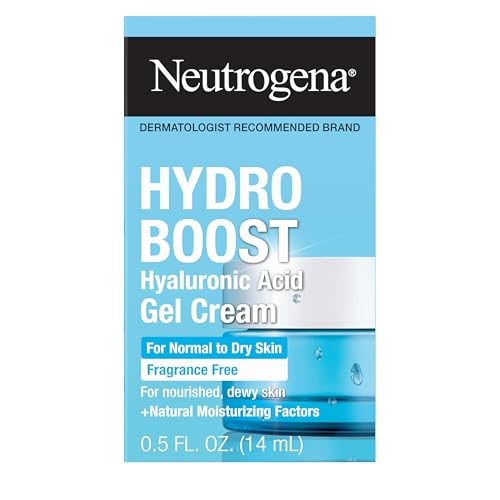
Neutrogena Hydro Boost Gel Cream Fragrance Free with Hyaluronic Acid instantly delivers 6x more* hydration (*vs. untreated skin). Lightweight, non-greasy gel cream absorbs quickly to leave skin feeling nourished, soft, and hydrated all day.

Body Gel CREAM: Neutrogena hydro boost body gel cream is fragrance-free and infused with hyaluronic acid to instantly nourish thirsty skin; Neutrogena is the #1 selling facial skincare brand
Managing Skin Hydration in Varied Humidity Levels
How should one adapt moisturizing routines to effectively manage skin hydration in diverse humidity levels? Experts urge adjusting moisturizers to match skin needs by humidity levels. In dry climates, use moisturizers containing small hyaluronic acid molecules that draw water from deeper skin layers, preventing dehydration. Conversely, in high humidity, select lightweight, gel-based moisturizers with medium to large hyaluronic acid molecules to retain moisture from the atmosphere without causing clogged pores and breakouts. Dermatologists recommend managing oily skin by incorporating exfoliating products with AHAs or BHAs, which clear pores and balance oil production. Consistently switching between richer creams in dry conditions and lighter formulations during humid seasons optimizes skin hydration and supports healthy skin, maintaining the delicate balance between moisture and oil essential for skin resilience. Additionally, using lightweight, non-comedogenic oils in moisturizing routines can provide essential fatty acids and hydration without clogging pores.
Recommended Products
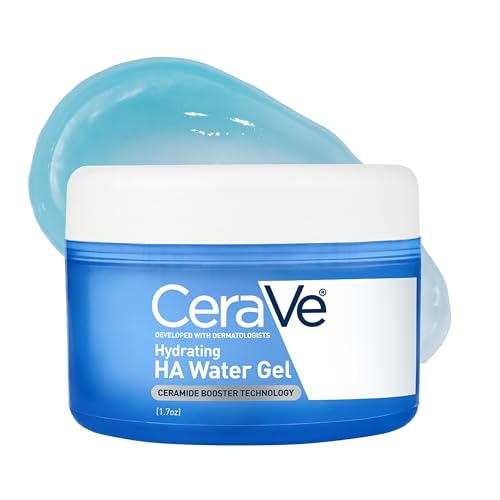
[ LONG-LASTING HYDRATION ] Provides 3 days of plumping hydration in 3 seconds, formulated with 3 essential ceramides, hyaluronic acid, Ceramide Booster Technology, and MVE Delivery Technology for up to 72 hours of controlled-release moisture, ensuring refreshed, and nourished skin all day long.

[ GEL MOISTURIZER FOR FACE ] Water-based moisturizer for face with 3 essential ceramides, niacinamide, and hyaluronic acid for immediate and long-lasting hydration while helping maintain the protective skin barrier.
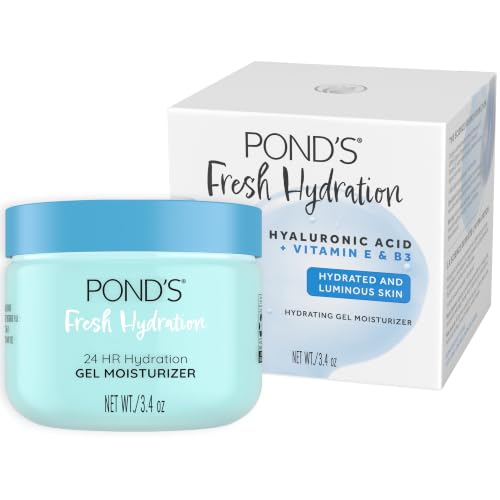
POND’S GEL MOISTURIZER – Loved for generations, this refreshing POND’S Hydrating Gel delivers 24-hour hydration and leaves skin looking dewy, soft, and luminous—so you can feel confident, from early mornings to winding down at night.
Protecting Skin From Environmental Aging Factors
Environmental aging factors profoundly influence skin condition, often surpassing genetic predisposition in impact, as evidenced by comparative studies on twins residing in varying climates. Experts emphasize the Importance of Moisturizing daily with products containing protective and hydrating ingredients, such as hyaluronic acid and ceramides, to shield overall skin from dry, indoor heating, and UV damage. During sudden weather changes, skin becomes more vulnerable to skin issues like irritation and premature aging. Dermatologists recommend applying at least 2 mg/cm² of broad-spectrum SPF 30 combined with antioxidants to reduce photoaging. In polluted urban areas, incorporate detoxifying elements like charcoal or green tea extracts to combat oxidative stress. Maintain a consistent moisturizing routine morning and evening to strengthen the skin barrier and reduce environmental harm effectively. Choosing alcohol-free moisturizers can further help minimize irritation and support the skin’s defense against environmental stressors.
Recommended Products

[ HYALURONIC ACID SERUM ] CeraVe Hydrating Hyaluronic Acid Serum for Face is formulated with our highest concentration of hyaluronic acid, an ingredient that helps retain skin’s natural moisture. Helps skin appear more hydrated and smoother.

[ HYALURONIC ACID MOISTURIZER ] With hyaluronic acid, ceramides and MVE technology for 24 hour hydration. Rich, velvety texture that leaves skin feeling smooth, it is absorbed quickly for softened skin without greasy, sticky, feel.

[Up to 120 Hours of Deep Hydration] Powered by 10 types of Hyaluronic Acid to deliver lasting hydration and visibly plump skin.
Tailoring Moisturizer Choices for Specific Climate Conditions
Because different climates impose unique challenges on skin, selecting moisturizers tailored to these conditions is critical to maintaining ideal skin health. Experts recommend using rich creams with hyaluronic acid, ceramides, and squalane in dry climates to reinforce the skin barrier and prevent water loss. In humid climates, opt for lightweight, gel-based moisturizers that balance oil production and avoid clogged pores. When temperatures drop, switch to thicker, oil-based creams enriched with peptides and fatty acids to strengthen the skin’s first line of defense against chapping and sensitivity. Adjust moisturizer choices according to skin type and environment to protect your skin effectively. Incorporate antioxidants like vitamin C at high altitudes to prevent photoaging, ensuring thorough climate-specific care. Pairing moisturizers with retinol can enhance skin hydration and reduce irritation, especially when introducing active treatments in varied environments.
Recommended Products

This Universal Quick Disconnect Coupler set features a new improved design for high flow performance and maximum service life.

MINIMALIST TECHNICAL DAYPACK: Designed for day hikes and excursions, this lightweight daypack features a streamlined yet capable design and durable ripstop main body fabric made from 100% recycled, ocean-sourced nylon

Frequently Asked Questions
Can Moisturizers Help With Skin Allergies Caused by Climate Changes?
A hypothetical case showed moisturizers reduce climate-induced inflammation by enhancing moisture barrier protection and hydrating agents. This supports topical treatments efficacy as part of seasonal skin care and allergy prevention strategies against skin allergy triggers and environmental irritants.
Are Natural Ingredients Better for Moisturizing in Extreme Climates?
Natural ingredients like organic oils, shea butter, aloe vera, and coconut oil provide effective hydration through natural hydrators. Beeswax benefits enhance barrier protection, while vitamin E and glycerin properties support moisture retention in extreme climates.
How Often Should I Reapply Moisturizer During Outdoor Activities?
When it comes to reapply moisturizer during outdoor sports, it’s best to do so every two hours or when hydration levels drop considerably. Weather variations, skin types, UV exposure, sweat resistance, and active ingredients all influence timing and frequency.
Do Moisturizers Affect Sunscreen Effectiveness in Different Climates?
Moisturizers can influence sunscreen absorption and UV protection through ingredient interactions and hydration levels. Proper application techniques enhance moisture retention and skin barrier function, ensuring climate adaptability without compromising sunscreen effectiveness under varying environmental conditions.
Can Diet Impact the Effectiveness of Moisturizers in Various Climates?
Diet can impact moisturizer effectiveness like a tidal wave reshaping a shore. Dietary fats, vitamin intake, and anti-inflammatory foods improve hydration levels, skin elasticity, nutrient absorption, and climate adaptation, while processed sugars hinder these benefits.


