As an Amazon Associate, we earn from qualifying purchases. Some links on this site are affiliate links at no extra cost to you. Our recommendations are based on thorough research and editorial judgment.


Understanding the Difference Between Hydration and Moisture

Skin hydration refers to the water content within epidermal cells, essential for plumpness and elasticity, requiring humectants like hyaluronic acid, which holds 1,000 times its weight in water. Moisture, in contrast, maintains the skin’s lipid barrier to prevent trans epidermal water loss, using occlusives such as ceramides and emollients like shea butter. Experts advise daily water intake around 2,200-3,000 ml and applying moisturizers post-cleansing. Understanding these distinctions enables targeted care for balanced skin health and longevity.
Key Takeaways
- Skin hydration refers to the water content within epidermal cells, essential for skin plumpness and elasticity.
- Skin moisture is the protective lipid barrier that prevents water loss and maintains skin texture.
- Hydration delivers water to skin cells, while moisture seals in this water to reduce transepidermal water loss (TEWL).
- Both humectants (like hyaluronic acid) and occlusives (like shea butter) are needed for balanced skin hydration and moisture.
- Proper moisture and hydration balance maintain healthy skin and prevent dryness, irritation, and premature aging.
What Is Skin Hydration?
You may be interested


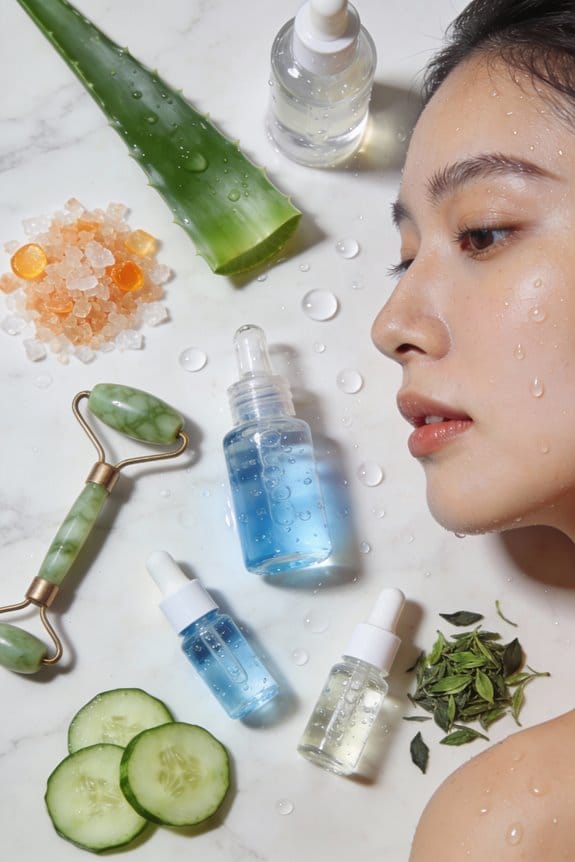
Skin hydration constitutes the measurement of water within the epidermal cells, a fundamental factor for maintaining the skin’s plumpness, elasticity, and functionality. Ideal hydration guarantees skin cells remain full and resilient, preventing dehydrated skin that appears tight or flaky. Experts emphasize incorporating hydrating skincare products enriched with humectants like hyaluronic acid and glycerin, which bind water from the environment and deeper tissue for enhanced moisture retention. To sustain healthy skin, professionals recommend drinking at least eight 8-ounce glasses of water daily and applying moisturizers immediately after cleansing to lock in hydration. Failure to maintain adequate skin hydration increases vulnerability to environmental stressors, accelerating signs of aging. Consistent focus on water balance within skin cells is imperative to uphold barrier function and overall dermal integrity. For optimal results, it is advised to apply hyaluronic acid serums on damp skin to maximize absorption and boost hydration.
What Is Skin Moisture?
The moisture barrier functions as the skin’s first line of defense, composed of dead skin cells bound by lipids to prevent water loss and shield against environmental damage. Skin moisture depends on the balance of water and lipids within this barrier, critical for reducing trans epidermal water loss (TEWL). Experts advise using moisturizers containing occlusives and emollients to seal hydration and restore the lipid matrix. Key hydrating ingredients like ceramides and omega fatty acids replicate natural skin oils, enhancing texture and barrier resilience. Proper skin moisture strengthens the skin barrier, decreases dryness, irritation, and flakiness, and supports a youthful appearance by softening fine lines. Consistent application of targeted moisturizers guarantees that the moisture barrier remains intact, effectively locking in hydration and maintaining peak skin health. Products formulated with ceramides and niacinamide have been shown to restore the skin’s barrier function and provide long-lasting hydration.
Why Both Hydration and Moisture Are Essential
Maintaining ideal skin health requires addressing both cellular water content and the protective lipid barrier concurrently. Both hydration and moisture are essential for healthy skin: hydration supplies water to skin cells, ensuring plumpness and elasticity, while moisture forms a protective skin barrier that prevents water loss. Experts emphasize using humectants to attract water into the skin and occlusives to seal it in, effectively preventing dryness and maintaining skin barrier integrity. Healthy skin should maintain approximately 64% water content; falling below this threshold results in dehydrated skin that appears dull and saggy. Incorporate moisturizing ingredients that balance these functions to avoid flaky, rough texture and premature aging. Follow a regimen with products combining humectants and occlusives to sustain ideal hydration and moisture levels for lasting skin health. Using serums with hyaluronic acid can provide deep hydration while soothing sensitive skin.
Signs Your Skin Needs Hydration or Moisture
Recognizing visible and tactile indicators is essential for diagnosing whether the skin requires additional hydration or moisture. Dull, sagging skin signals insufficient hydration, indicating the skin needs more water to restore plumpness. Conversely, rough, flaky skin denotes a loss of moisture, meaning the skin’s barrier function is compromised, and oils must be replenished. Experts advise monitoring symptoms such as tightness and itchiness, especially in dehydrated skin, which in oily skin types may trigger excess oil production. Assess skin type carefully to select targeted skincare products that address specific skin needs. When both dullness and roughness appear, utilize a balanced regimen to remedy hydration and moisture deficits simultaneously. Prioritize consistent evaluation of symptoms like redness or scaling to adjust treatment and restore ideal skin health. Using products formulated with hyaluronic acid and ceramides can provide lasting hydration and support to the skin barrier for optimal results.
Recommended Products

Retinol ACE combats the appearance of wrinkles and fine lines.

Morning and evening skincare routine: Apply to cleansed, dry face, neck, and eye area

Advanced 360-degree anti-aging moisturizer delivering instant and long-term results, plumping wrinkles, and restoring skin’s natural radiance.
Key Ingredients for Hydrating the Skin
Effective skin hydration depends on incorporating scientifically proven humectants that attract and retain water within the epidermis, thereby restoring ideal moisture levels and improving skin resilience. Hyaluronic acid, capable of holding up to 1,000 times its weight in water, is crucial for deep skin hydration. Glycerin, another significant humectant, draws moisture from the atmosphere and lower skin layers, preventing dryness. Aloe vera provides intense hydration while soothing the skin. Experts advise using formulations rich in these humectants alongside natural moisturizing agents like honey and oats to enhance hydration. Emollients play a secondary role by supporting the protective barrier, but primary focus should remain on humectants for effective skin hydration. Avoid relying solely on emollients; prioritize scientifically supported hydration ingredients to guarantee peak moisturizing outcomes. Additionally, combining humectants with antioxidants can protect skin from environmental stressors and improve overall skin health.
Recommended Products

Rejuvenates the look and feel of the skin Supports normal healing Triggers natural Vitamin C production in the skin
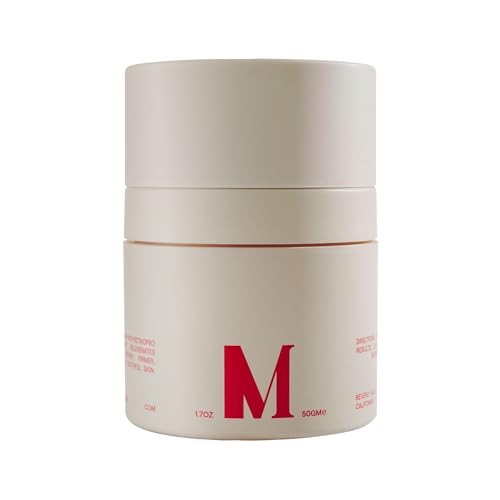
Clinical Grade, Multi-Modal Night Cream: The InstaFacial Emulsion is a nourishing night treatment formulated with potent retinoids and bioengineered growth factor. Retinoids accelerate cell turnover and stimulate collagen production, while growth factors signal skin repair cells (fibroblasts) to enhance collagen production and renewal. Together, they promote firmer, smoother, and healthier-looking skin more effectively than using either ingredient alone.

LONG-LASTING HYDRATION: The SUPER Face Hydrator treats dehydrated skin by delivering high-quality skin-conditioning ingredients on and deep below the skin's surface for a mega-dose of hydration that lasts up to 48 hours.
Effective Moisturizing Ingredients to Seal Hydration
Following the application of hydrating agents, sealing in moisture with occlusive ingredients prevents trans epidermal water loss (TEWL), maintaining ideal skin hydration. Essential occlusives like petrolatum and beeswax form a protective skin barrier, effectively locking in moisture. Incorporate emollients such as shea butter and jojoba oil to smooth skin texture and reduce moisture escape by filling cellular gaps. Ceramides must be included to replenish and strengthen the skin barrier, supporting long-term skin health. Use moisturizers blending omega fatty acids and squalane to mimic natural oils, enhancing moisture retention and improving elasticity. Experts recommend applying humectants first to attract hydration, then layering occlusives and emollients to seal in moisture for up to 12 hours. Consistent use of these ingredients is crucial to maximize hydration and maintain balanced skin moisture levels. Additionally, using products that contain ceramides and botanical extracts can further enhance skin hydration and barrier repair.
Recommended Products

Buy MZ SKIN The Rich Moisturiser 50ml online | Alyaka UK

PREMIUM K-BEAUTY BACKED BY EXPERTISE — Developed by doctors and pharmacists with a focus on safe, effective ingredients. Trusted in Korea with 1,000,000 units sold in 6 months through 5,000 local pharmacies.
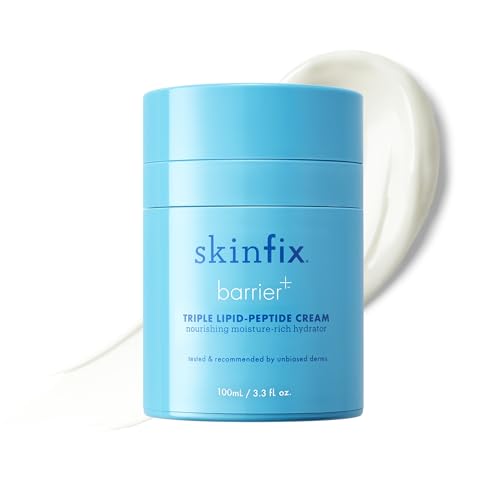
BARRIER+ TRIPLE-LIPID PEPTIDE CREAM - This moisturizer—powered by clinically proven ingredients like ceramides and peptides—amplifies your skin’s ability to retain moisture instantly and over time by rebuilding its protective barrier.
Matching Skincare Products to Your Skin Type
How should skincare products be selected to appropriately address diverse skin types? Experts recommend identifying whether the skin type is dry, oily, or combination before choosing skincare products. For dry skin, apply thick, occlusive moisturizers containing ingredients like shea butter or petrolatum to create a protective barrier that prevents moisture loss. For dehydrated skin, use lightweight hydrating serums rich in humectants such as hyaluronic acid, which attract water without adding oil. Oily skin requires water-based, non-comedogenic moisturizers to maintain hydration while avoiding pore clogging. Dermatologists emphasize combining hydrating and moisturizing products in a routine to optimize hydration and support the skin’s natural moisture barrier. Selecting products tailored to skin type guarantees balanced hydration, efficient moisturizing, and reduces risks such as irritation or acne caused by inappropriate formulations. Incorporating hyaluronic acid-rich creams into your routine helps retain moisture and enhance skin elasticity effectively.
Recommended Products

⭐Reduce visible traces of aging young and energetic-glow

Advanced Anti-Aging Solution: Crafted to target wrinkles and expression lines, ideal for complementing non-invasive cosmetic treatments

TNS Advanced+ Serum improves the appearance of coarse wrinkles, fine lines, skin tone, and texture
Tips for Maintaining Balanced Skin Hydration and Moisture
Why is maintaining balanced skin hydration and moisture critical for skin health? Proper hydration guarantees water reaches skin cells, while moisture retention prevents water loss, preserving the skin barrier’s integrity. Experts emphasize drinking 3,000 ml of water daily for males and 2,200 ml for females to support internal hydration.
In the skincare routine, apply humectants like hyaluronic acid or glycerin first to attract water and boost hydration levels. Follow immediately with emollients such as jojoba oil or shea butter; these seal in moisture and protect against water loss. Tailor product choices to skin types and seasonal changes, using richer moisturizers during dry winter months. Maintain consistency to enhance barrier function, prevent dehydration, and achieve balanced skin hydration and moisture effectively. Using alcohol-free formulas in skincare can help prevent irritation and preserve moisture, especially for sensitive skin.
Recommended Products

Patent Pending Hydrolipid FusionTM Technology: The HYDR/O face moisturizer uses patented sonication technology to transform lipid and water into uniform nano-molecules. Unlike traditional oil-and-water emulsions, this fusion creates a biomimetic colloid that mimics skin’s natural hydrolipid structure, providing superior hydration & barrier fortification improving skin texture, softness, and elasticity.

SUITABLE FOR ALL SKIN TYPES: Our formula is designed to work well with sensitive skin and won’t clog pores. This hyaluronic acid serum can be used as part of your morning and evening skincare routine for balanced, refreshed skin. Absorbs quickly with a gentle-lightweight formula, providing a silky, smooth skin texture

DEEP-CLEANING CLEANSER: Our glycolic acid-based cleanser gently exfoliates to unclog pores and dissolve excess oil, while Chamomile and Lavender flower extracts soothe redness, calm irritation, and promote a refreshed complexion.
Frequently Asked Questions
What Is the Difference Between Hydration and Moisture?
Hydration involves supplying skin health with hydration sources like humectants to address dehydrated skin, while moisture retention uses moisturizing techniques and moisture types, such as occlusives, to strengthen the skin barrier and guarantee seasonal hydration benefits through hydrating products.
How Do I Know if I Need Moisture or Hydration?
Determining moisture or hydration needs depends on skin type, hydration signs, and moisture levels, influenced by lifestyle factors, age effects, and seasonal changes. Adjust daily routines and product ingredients accordingly, while avoiding hydration myths and considering underlying skin conditions.
Do You Hydrate or Moisturize First?
Studies show 75% of skincare success depends on layering skincare products correctly. Hydrating product recommendations suggest applying hydrators first, then moisture-rich ingredients. Adjust routines for skin type classifications, seasonal skincare adjustments, and include hydration-boosting foods and facial mist benefits.
What Is the 3 Minute Rule for Moisturizer?
The 3 minute rule for moisturizer emphasizes prompt moisturizer application techniques within three minutes post-cleansing to correct dry patches, optimize long lasting moisturizer tips, and adjust seasonal skincare routines for various skin types, including moisturizer for oily skin.


